Change Leader: Richard Attfield
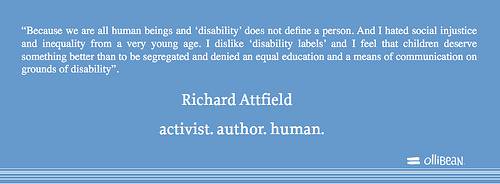
Richard Attfield, a contributing author to "Autism and the Myth of the Person Alone", is passionate about the rights of children with disability labels to have equal access to education and communication supports.
OlliNEPAL at the SERC School
OlliNEPAL at the SERC School in Kathmandu
Snacking: The Little Bite That Won’t Hurt You
Ollibean contributor Kristie Salzer talks about the benefits of "refueling" between lunch and dinner to decrease hunger related meltdowns for kids. We love her suggestions of 25 super easy snacks to get you started!
The Reality Behind Those Walls
The Judge Rotenberg Center is recruiting disabled students in the Midwest to be legally tortured with electric shocks. Help us stop this inhumane treatment of disabled people.
More Problems With Functioning Labels
Every now and
The Loud Hands Project
Love this video published by the Autistic Self Advocacy Network. Share it, Post it, Donate at http://www.indiegogo.com/The-Loud-Hands-Project?a=351448 so they will make more:)
Mother
This is for every person who embodies the meaning of motherhood. This is for the ones who nurture and protect, who never consider their lives more important than the lives of the ones being nourished, educated, protected and loved.
Supporting Young Autistics
We hope that young autistics today will be proud of themselves and without shame. The message that boy received at that moment was the opposite of acceptance. It was ableist and it came from someone who is part of our own community.
Inclusive Education: It’s Great If You Can Get It
Inclusive schools need to become a reality for all students across the nation regardless of abilities, socio-economic background and geographic location. Unfortunately, many school districts do not see the inclusive classroom as the
Dinosaur Claw: Physical Therapy for Cerebral Palsy
"Helping Hands" at Rice University have developed Dino-Might, a controller/game designed for patients with cerebral palsy to use for physical therapy.
2014 Joint Letter to the Sponsors of Autism Speaks
January 6, 2014
To the Sponsors, Donors, and Supporters of Autism Speaks:
We, the undersigned organizations representing the disability community, are writing to urge you to end your support for Autism Speaks. We profoundly appreciate your interest
Creators of Halo & Star Wars Renew Student’s Dream after Charter School Rejection
Self-advocate Tres Whitlock on how the NPR story, "Florida Charter Schools Failing Disabled Students" has impacted him.
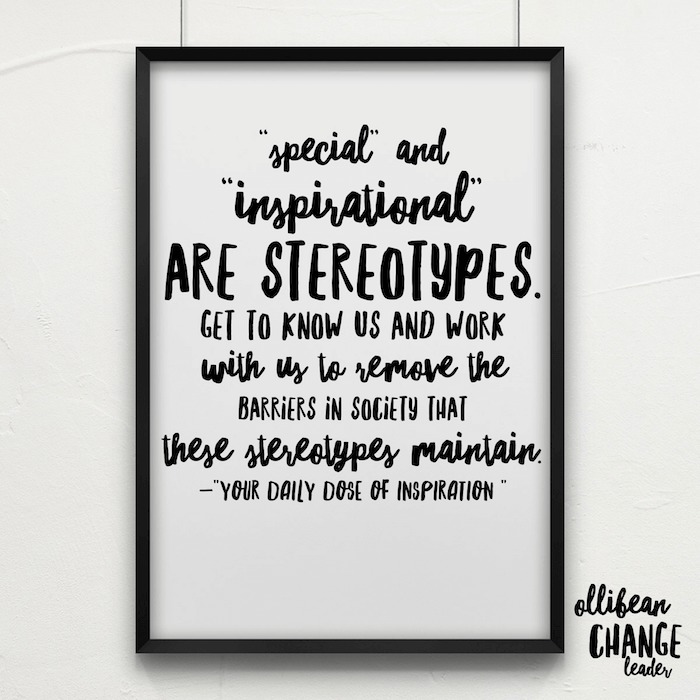
Don’t Call Me Inspirational
"Disability is not something terrible that needs to be fixed, cured, or made to go away forever. It is a natural part of reality. We ask for acceptance as equal members of society." From the PSA "Your Daily Dosage of Inspiration" by Cheryl Green and Caitlin Wood.
Amy Sequenzia : Friendship and Respect
It is a mistaken idea that we, autistics, lack empathy. It is also a myth that we are not social. My friends and I, we understand and respect differences. And we understand that we all have a lot to contribute, in a diversity of manners.
‘Autistic People Are’ by Amy Sequenzia
Autistic People Are
Awesome!
Autistic People are the real experts on autism.
Autistic people are not
more complicated than non-autistics.
Autistic people are
misunderstood and mischaracterized by non-autistics.
Autistic people are artistic and we don’t need speech to show our talents.
Autistic people